Skip to content

Catalogue

Twelve thingshiding in the dark

The objects from the eyepiece on our home page, with everything you need to find them yourself. Visibility is worked out for our roof, tonight.

0 of 12 found in the eyepieceGo hunting

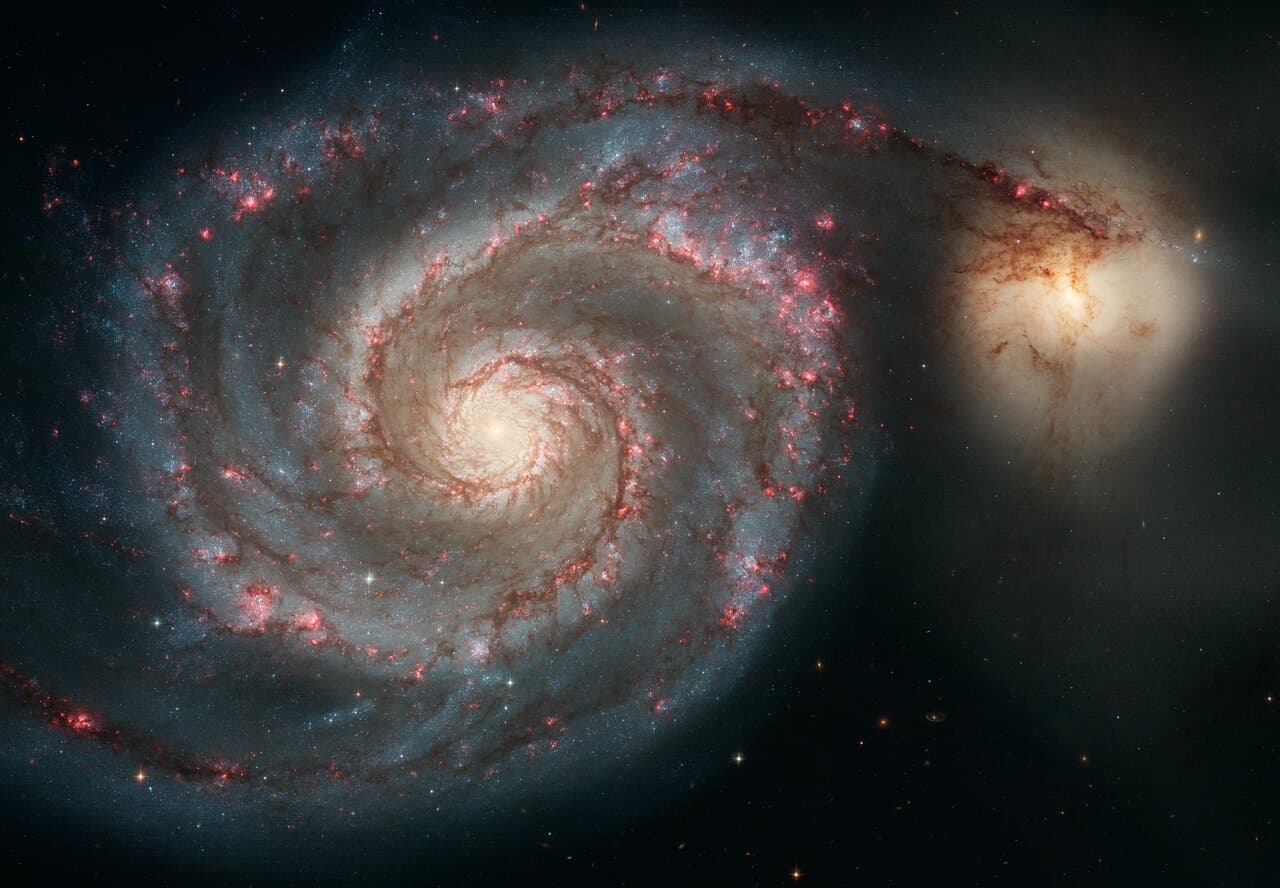
  1. Whirlpool Galaxy, spiral galaxy in Canes Venatici

    NASA, ESA, S. Beckwith (STScI) and the Hubble Heritage Team

    01 · M51 · NGC 5194

    Whirlpool Galaxy

    A grand spiral galaxy in the middle of swallowing a smaller companion.

    The first galaxy in which anyone saw spiral arms, sketched by Lord Rosse in 1845. Its companion, NGC 5195, is tugging on one arm, and the encounter has set off waves of star formation that show as pink knots along the spirals.

    Type
    Spiral galaxy
    Constellation
    Canes Venatici
    Distance
    31 million light-years
    Brightness
    Magnitude 8.4
    Best season
    Spring evenings, high overhead
    On our deck
    Best in the 40 cm reflector

    How to find it

    Start at Alkaid, the last star in the handle of the Plough, and sweep about three and a half degrees south-west. In our 40 cm reflector the two cores and a hint of the arms show on a dark night.

    Working out tonight
  2. Drawn at CosmicLens from the cluster’s real star positions

    02 · M45 · Seven Sisters

    The Pleiades

    Hot young blue stars, a hundred million years old, drifting through a veil of dust.

    Most people see six or seven stars with the naked eye; binoculars show dozens. The blue haze photographs pick up is not left over from the stars’ birth but an unrelated cloud of dust the cluster happens to be passing through.

    Type
    Open star cluster
    Constellation
    Taurus
    Distance
    444 light-years
    Brightness
    Magnitude 1.6
    Best season
    Autumn to early spring
    On our deck
    Best in binoculars or the 80 mm refractor

    How to find it

    Follow the line of Orion’s belt up and to the right, past orange Aldebaran, to a small misty dipper of stars. Binoculars give the best view; it is too large for most telescopes.

    Working out tonight

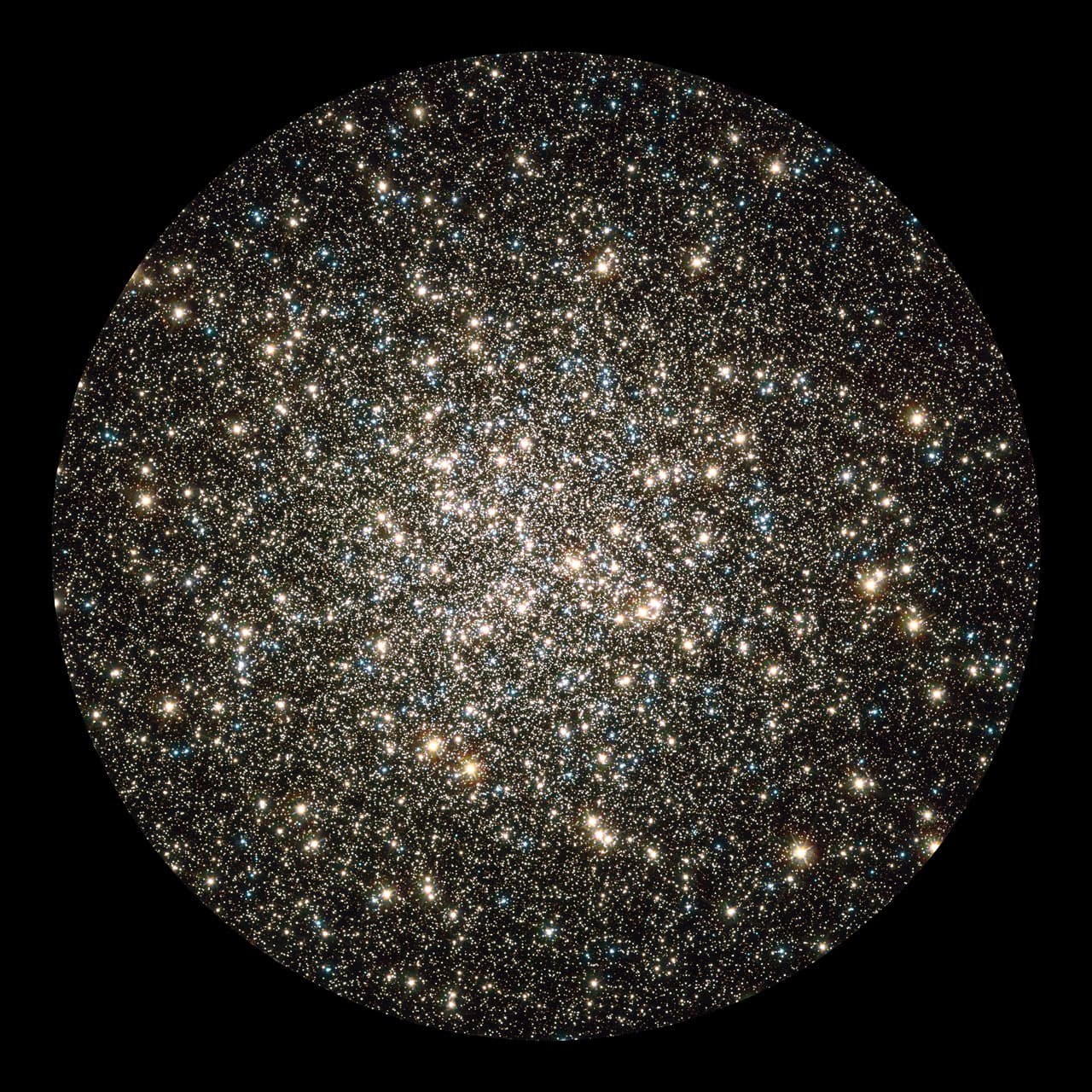
  3. Great Hercules Cluster, globular cluster in Hercules

    NASA, ESA and the Hubble Heritage Team (STScI/AURA)

    03 · M13 · NGC 6205

    Great Hercules Cluster

    Several hundred thousand stars packed into a ball 145 light-years wide.

    Globular clusters are among the oldest things in the galaxy, their stars billions of years older than the Sun. In 1974 the Arecibo radio telescope beamed a message toward M13; it will arrive in about 25,000 years.

    Type
    Globular cluster
    Constellation
    Hercules
    Distance
    25,000 light-years
    Brightness
    Magnitude 5.8
    Best season
    Summer, high in the evening sky
    On our deck
    Best in the 40 cm reflector

    How to find it

    Find the Keystone, the lopsided square at the centre of Hercules, and look a third of the way down its western side. A telescope resolves the edges into a swarm of separate stars.

    Working out tonight

  4. Drawn at CosmicLens from the stars’ true colours and separation

    04 · Beta Cygni

    Albireo

    A gold star and a sapphire one side by side: the finest colour contrast in the northern sky.

    To the eye Albireo is a single star at the head of the swan. Any small telescope splits it into a warm golden giant and a hot blue-white companion. Whether they truly orbit each other is still argued over.

    Type
    Double star
    Constellation
    Cygnus
    Distance
    about 430 light-years
    Brightness
    Magnitude 3.1 and 5.1
    Best season
    Summer and early autumn
    On our deck
    Best in the 80 mm refractor

    How to find it

    Albireo marks the beak of Cygnus, at the foot of the Northern Cross, halfway between Vega and Altair. Use low power: the pair is wide and the colours show best slightly out of focus.

    Working out tonight

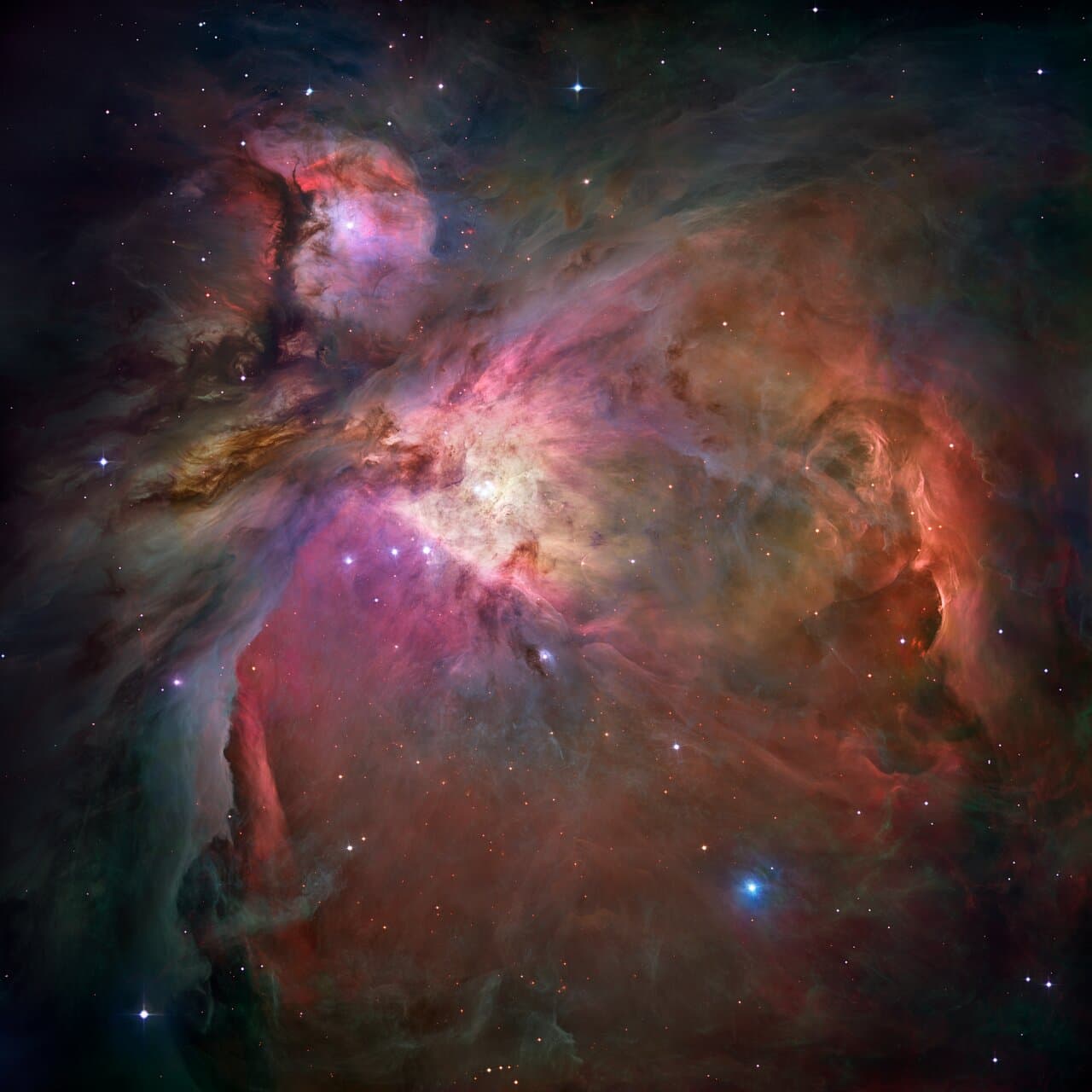
  5. Orion Nebula, emission nebula in Orion

    NASA, ESA, M. Robberto (STScI/ESA) and the Hubble Space Telescope Orion Treasury Project Team

    05 · M42 · NGC 1976

    Orion Nebula

    A stellar nursery where new stars are switching on inside a cloud of glowing gas.

    The nearest large region of star birth to Earth. At its heart four young stars, the Trapezium, light the gas around them. Telescopes show the cloud in grey-green; long exposures reveal the reds and pinks of glowing hydrogen.

    Type
    Emission nebula
    Constellation
    Orion
    Distance
    1,344 light-years
    Brightness
    Magnitude 4.0
    Best season
    Winter evenings, low in the south
    On our deck
    Glorious in any telescope

    How to find it

    Below Orion’s belt hangs his sword, three fainter stars in a line. The middle one is not a star at all: even the naked eye sees it as a soft smudge.

    Working out tonight

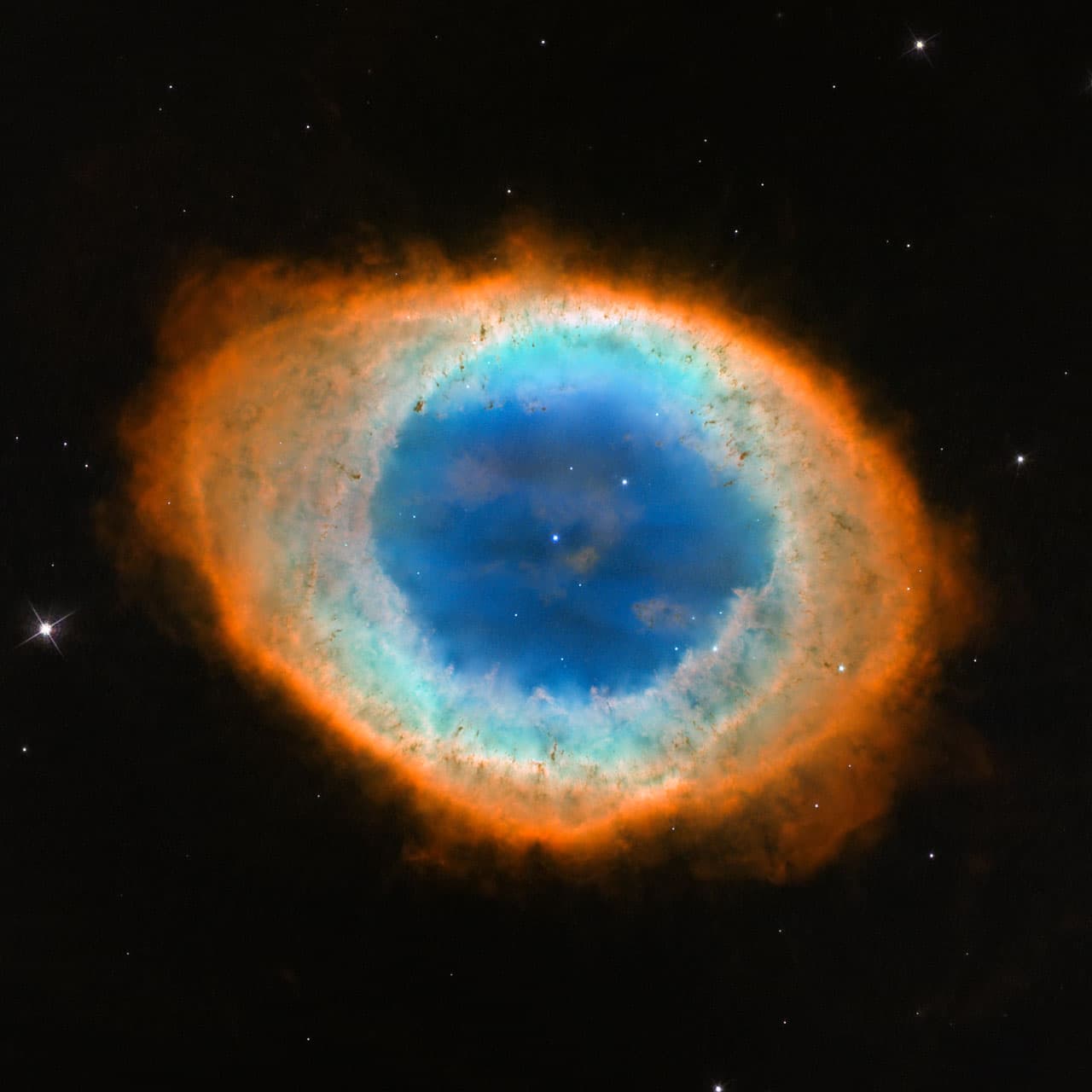
  6. Ring Nebula, planetary nebula in Lyra

    NASA, ESA and the Hubble Heritage Team (STScI/AURA)

    06 · M57 · NGC 6720

    Ring Nebula

    The cast-off shell of a dying Sun-like star, lit by the white dwarf at its centre.

    About four thousand years ago the star at the centre shrugged off its outer layers. We are looking almost straight down a tube of glowing gas, which is why it appears as a ring. Our Sun will do something similar in five billion years.

    Type
    Planetary nebula
    Constellation
    Lyra
    Distance
    2,600 light-years
    Brightness
    Magnitude 8.8
    Best season
    Summer, high overhead
    On our deck
    Best in the 40 cm reflector

    How to find it

    Halfway between the two stars at the bottom of the small parallelogram below Vega. In the eyepiece it looks like a tiny grey smoke ring, unmistakable once found.

    Working out tonight

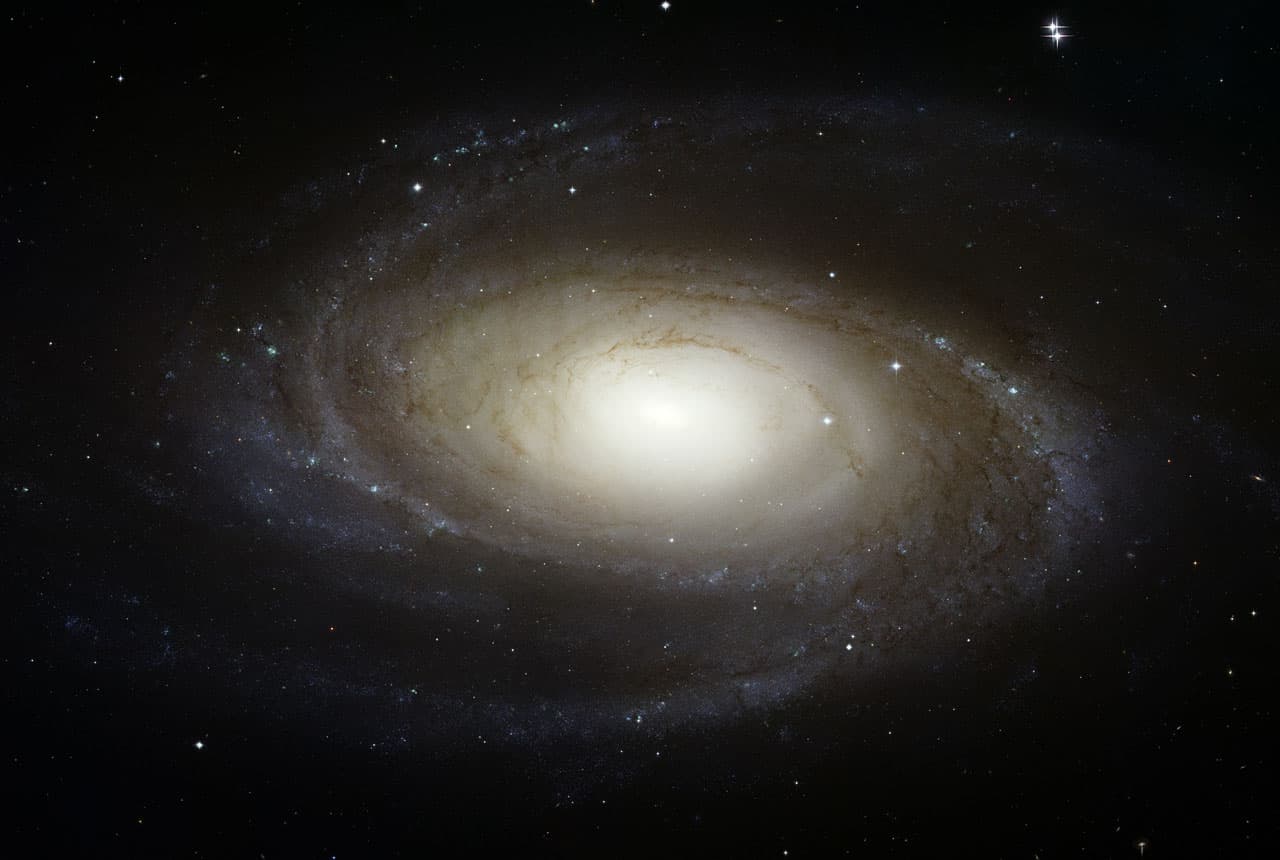
  7. Bode’s Galaxy, spiral galaxy in Ursa Major

    NASA, ESA and the Hubble Heritage Team (STScI/AURA)

    07 · M81 · NGC 3031

    Bode’s Galaxy

    A bright spiral, its arms traced by young blue star clusters, visible in binoculars.

    One of the brightest galaxies in the sky and a neighbour of M82, whose disturbed shape it is partly responsible for. A dark night shows its bright core and an oval glow; a large telescope hints at the arms.

    Type
    Spiral galaxy
    Constellation
    Ursa Major
    Distance
    11.8 million light-years
    Brightness
    Magnitude 6.9
    Best season
    All year, best in spring
    On our deck
    Best in the 40 cm reflector

    How to find it

    Draw a line from Phecda through Dubhe in the Plough and carry on the same distance again. M81 and M82 sit together in one low-power field.

    Working out tonight

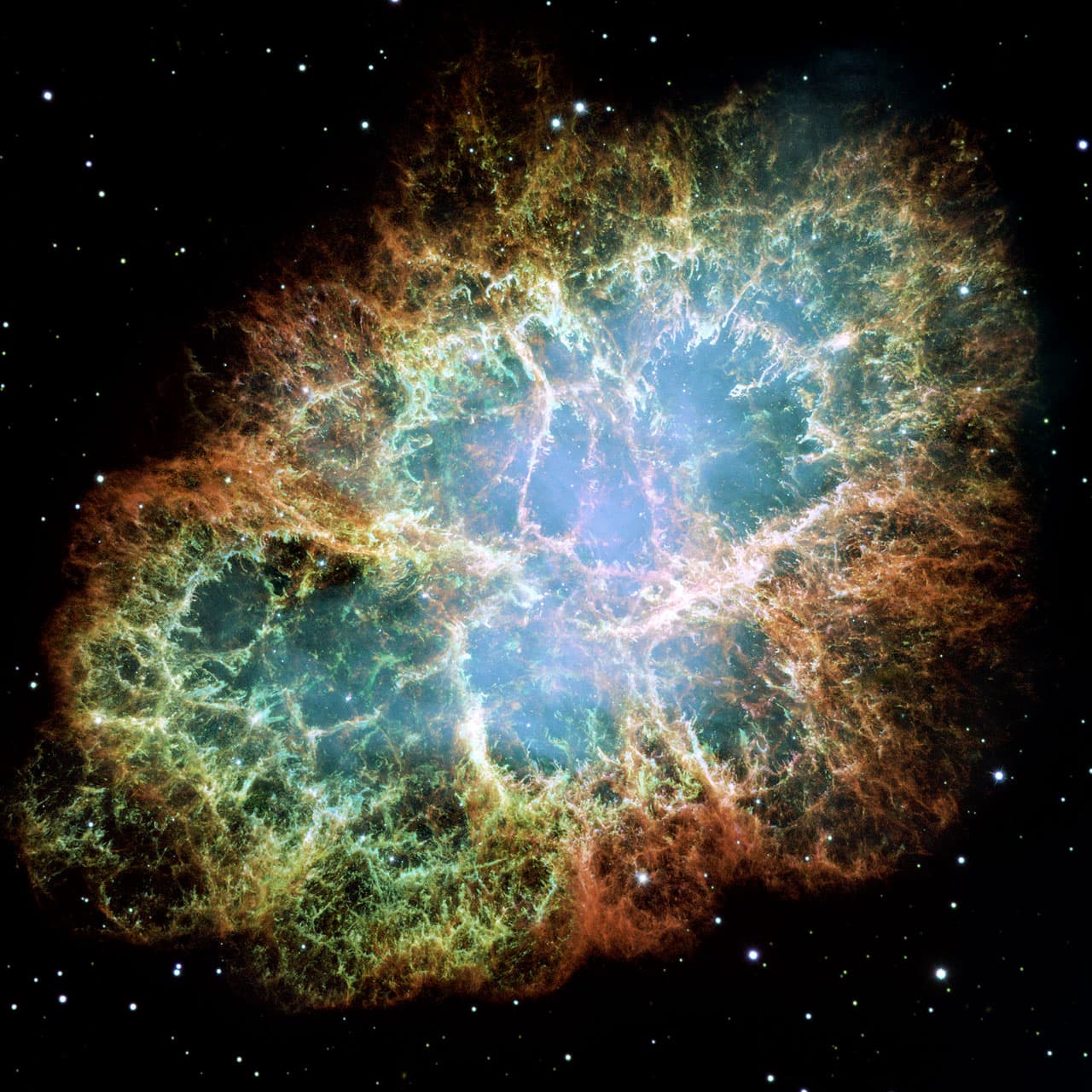
  8. Crab Nebula, supernova remnant in Taurus

    NASA, ESA, J. Hester and A. Loll (Arizona State University)

    08 · M1 · NGC 1952

    Crab Nebula

    The wreckage of a star that exploded in 1054, seen then as a guest star bright enough to show by day.

    Chinese astronomers recorded the explosion in July 1054. At the centre spins a pulsar, the collapsed core of the star, turning thirty times a second and still powering the glow of the expanding debris.

    Type
    Supernova remnant
    Constellation
    Taurus
    Distance
    6,500 light-years
    Brightness
    Magnitude 8.4
    Best season
    Winter
    On our deck
    Best in the 40 cm reflector

    How to find it

    Just over a degree north-west of Zeta Tauri, the tip of the bull’s southern horn. It shows as a faint oval patch; a dark sky and patience help.

    Working out tonight

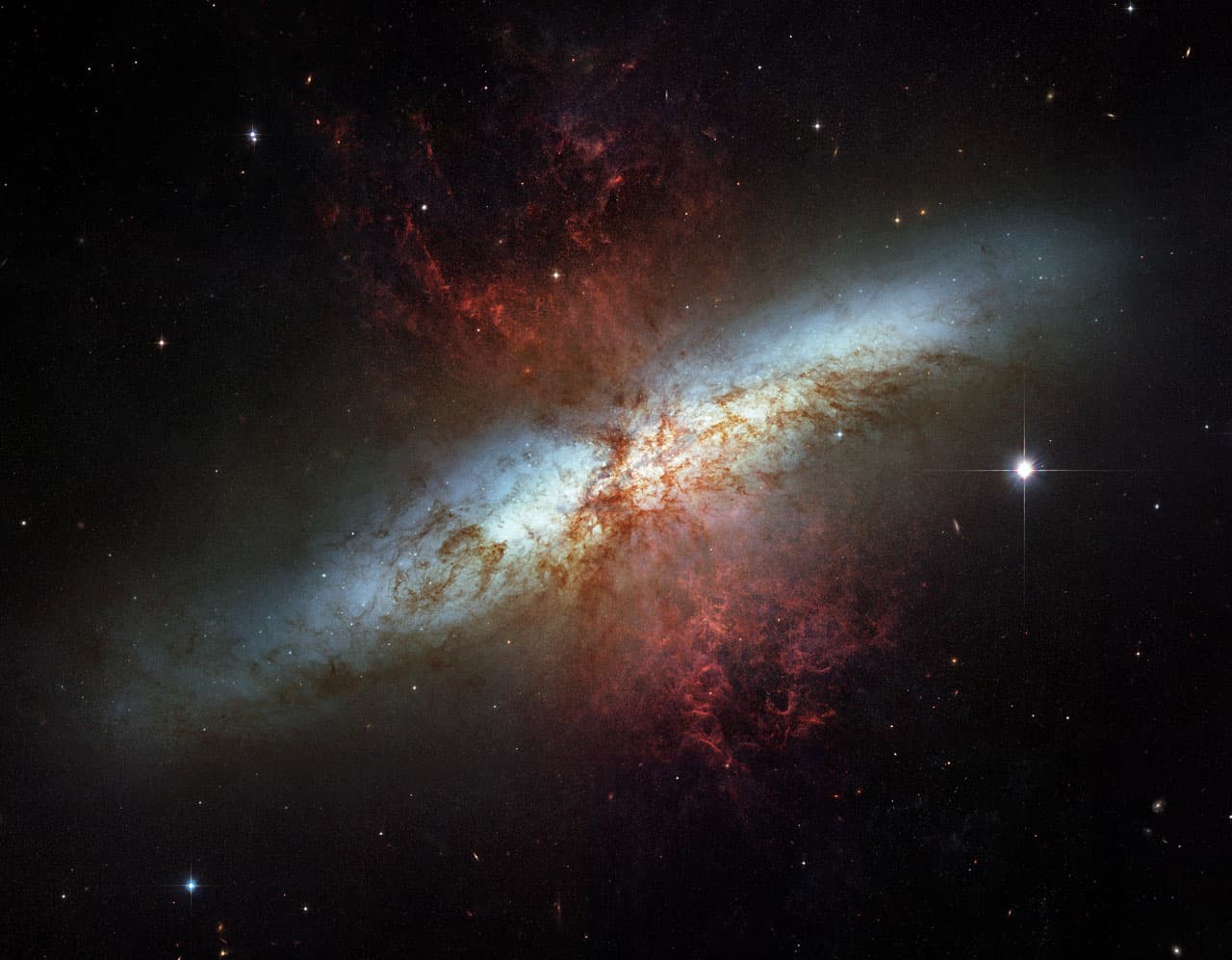
  9. Cigar Galaxy, starburst galaxy in Ursa Major

    NASA, ESA and the Hubble Heritage Team (STScI/AURA)

    09 · M82 · NGC 3034

    Cigar Galaxy

    A galaxy blazing with new stars, blowing plumes of hot gas out of its own disc.

    A close pass by M81 stirred up M82’s gas, and it is now forming stars ten times faster than our galaxy. Seen edge on, it looks like a thin silver splinter crossed by dark lanes of dust.

    Type
    Starburst galaxy
    Constellation
    Ursa Major
    Distance
    12 million light-years
    Brightness
    Magnitude 8.4
    Best season
    All year, best in spring
    On our deck
    Best in the 40 cm reflector

    How to find it

    In the same low-power field as M81, about half a degree to the north.

    Working out tonight

  10. Drawn at CosmicLens from the clusters’ star counts

    10 · NGC 869 and NGC 884

    Double Cluster

    Two young star clusters side by side, a few hundred suns each, in one low-power view.

    Visible to the naked eye as a brighter knot in the Milky Way between Perseus and Cassiopeia. Through a telescope the two swarms glitter side by side, with a few red supergiants among the blue-white stars.

    Type
    Pair of open clusters
    Constellation
    Perseus
    Distance
    7,500 light-years
    Brightness
    Magnitude 3.7 and 3.8
    Best season
    Autumn and winter
    On our deck
    Best in the 80 mm refractor

    How to find it

    Follow the line from the two brightest stars in the W of Cassiopeia toward Perseus. On a dark night it is a misty patch even without binoculars.

    Working out tonight

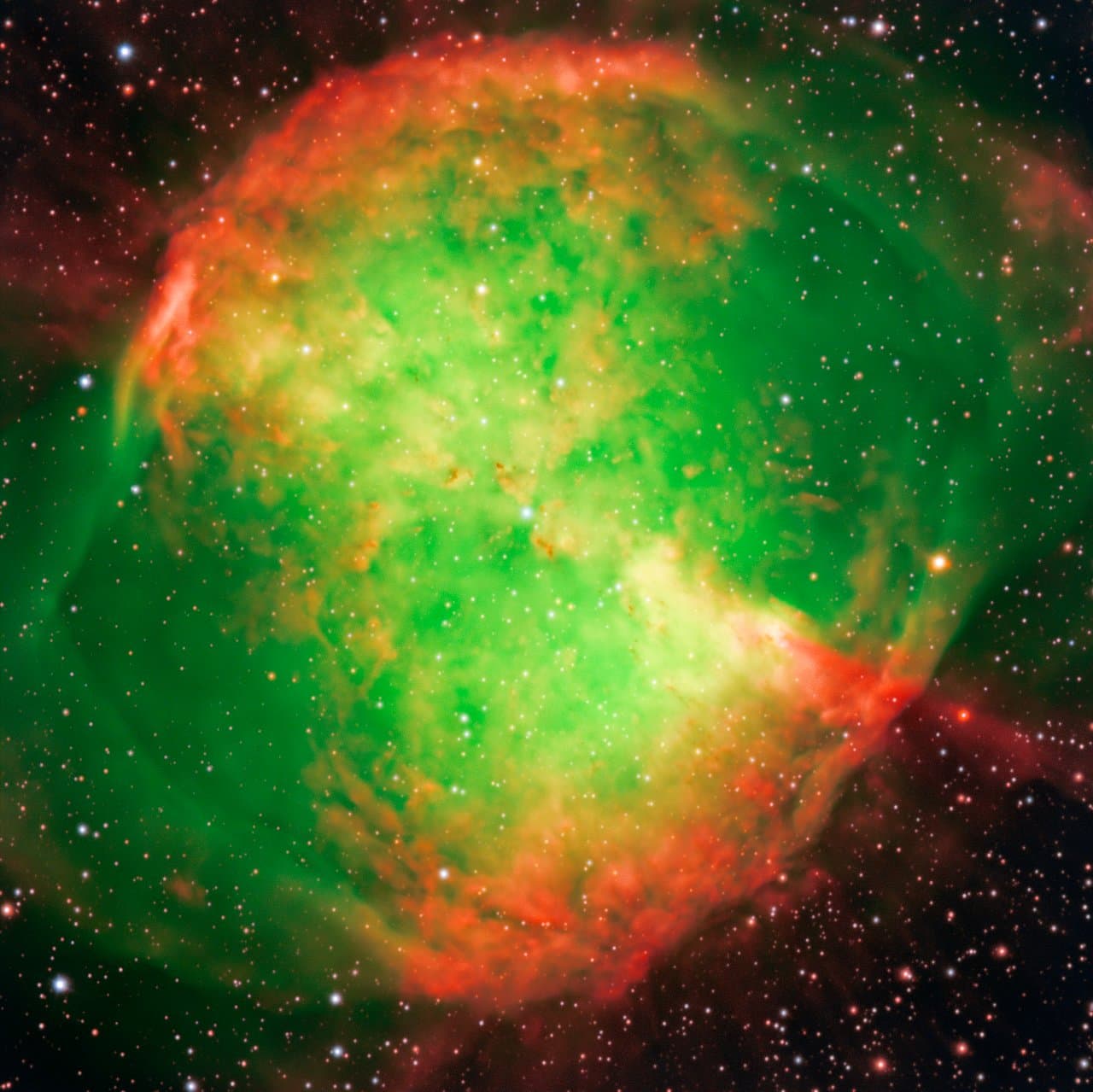
  11. Dumbbell Nebula, planetary nebula in Vulpecula

    European Southern Observatory

    11 · M27 · NGC 6853

    Dumbbell Nebula

    The first planetary nebula ever found: an hourglass of gas puffed out by an ageing star.

    Charles Messier found it in 1764 while hunting comets. It is bright enough for binoculars, and the apple-core shape shows clearly in any telescope on a dark night.

    Type
    Planetary nebula
    Constellation
    Vulpecula
    Distance
    1,360 light-years
    Brightness
    Magnitude 7.5
    Best season
    Late summer and autumn
    On our deck
    Best in the 40 cm reflector

    How to find it

    From the arrow of Sagitta, hop three degrees north of its tip, Gamma Sagittae.

    Working out tonight

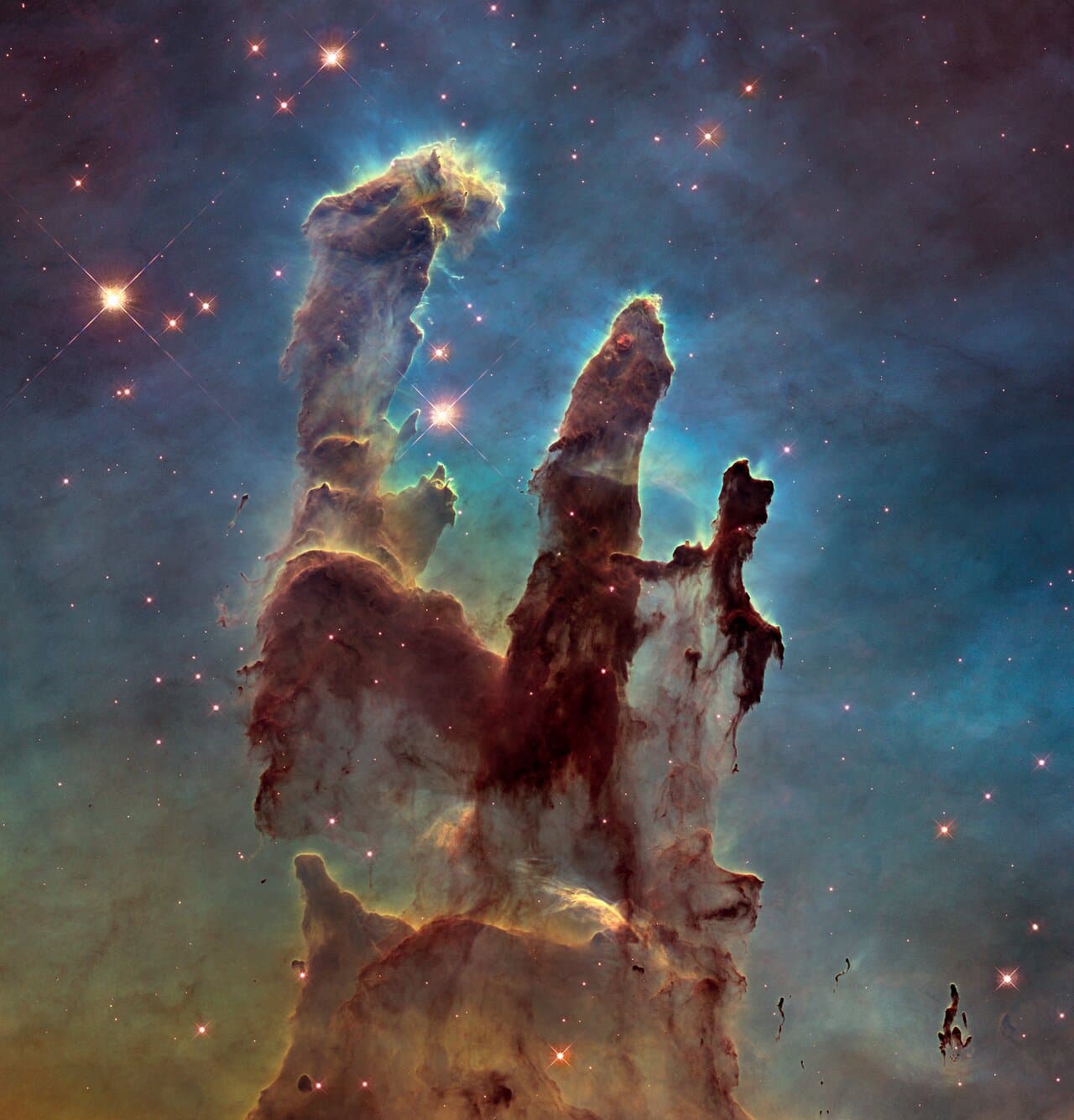
  12. Pillars of Creation, star-forming region in Serpens

    NASA, ESA and the Hubble Heritage Team (STScI/AURA)

    12 · M16 · Eagle Nebula

    Pillars of Creation

    Towers of cold gas and dust, light-years tall, with new stars forming inside them.

    The most famous picture Hubble ever took. Ultraviolet light from nearby young stars is slowly eroding the pillars; dense knots at their tips are where new stars are condensing.

    Type
    Star-forming region
    Constellation
    Serpens
    Distance
    7,000 light-years
    Brightness
    Magnitude 6.0
    Best season
    Summer, low in the south
    On our deck
    Best in the 40 cm reflector with a nebula filter

    How to find it

    Low in our southern summer sky, about two and a half degrees north-west of the Swan Nebula in Sagittarius. The cluster is easy; the pillars need a large telescope and a filter.

    Working out tonight

CosmicLens

0 stars above the horizon tonight

Made with Modulify